
Summary:
Relocating an employee sounds straightforward until it isn’t. The timeline shifts, the employee’s family has questions no one anticipated, the old property needs to be cleared out, and suddenly what looked like a simple move has turned into a three-vendor coordination problem on your calendar.
If you’re an HR manager, office manager, or business owner in Suffolk County managing a relocation — even just one — this page is for you. We’ll walk through what a real corporate relocation service looks like, what questions to ask before you hire anyone, and what makes a moving partner worth trusting with something this important.
What Corporate Relocation Services Actually Include
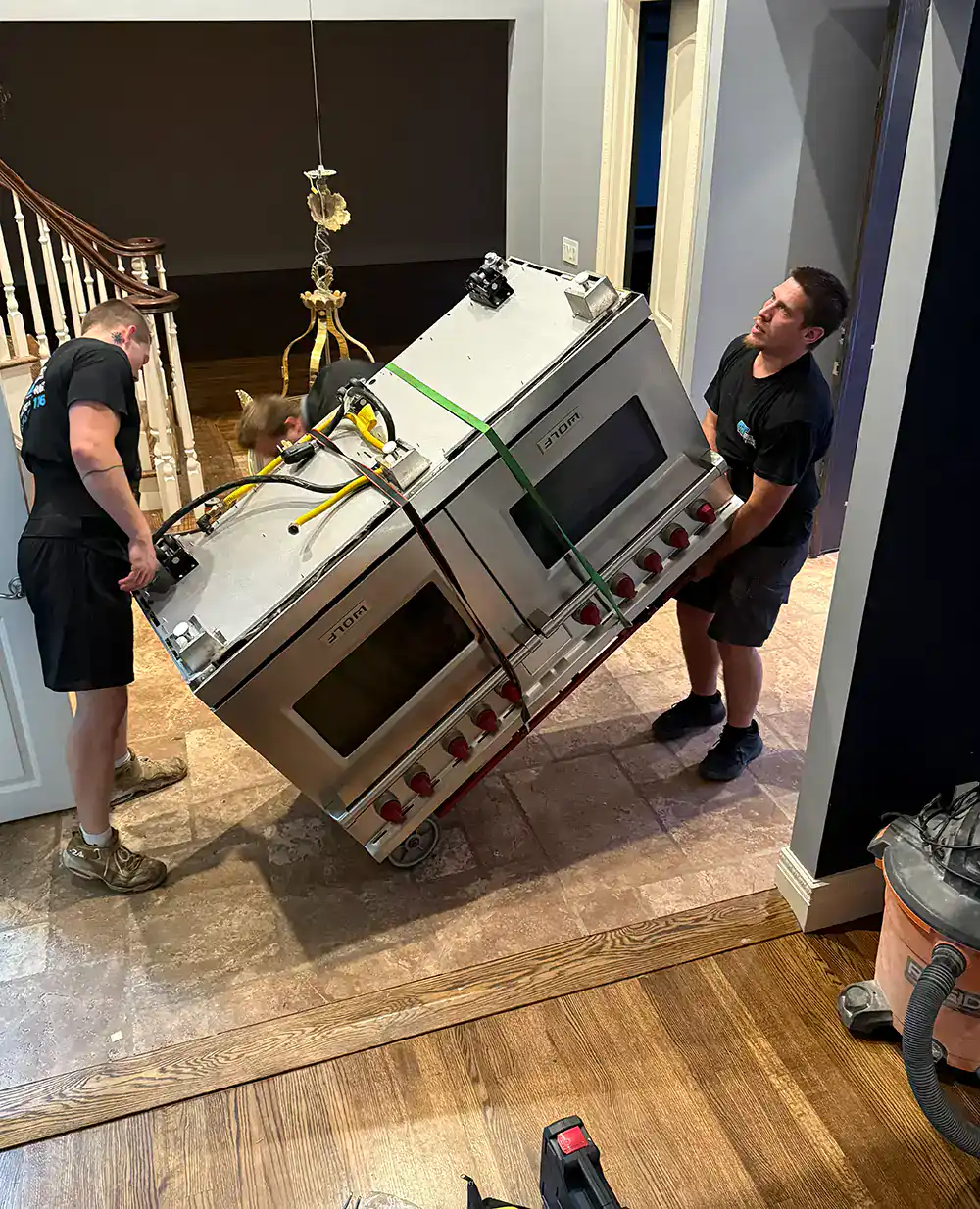
Corporate relocation services go well beyond loading a truck. At the core, we manage the physical move of an employee’s household goods — but we handle everything around that, too. That means packing, specialty item handling, climate-controlled storage for gap periods, and in some cases, clearing out the employee’s old property at the same time.
The goal is to reduce the burden on both the HR department and the employee. When the logistics are handled professionally, the employee can focus on starting their new role rather than managing a move. That’s the whole point — and it’s why the quality of the company you choose matters more than most people realize until something goes wrong.
What Does a Corporate Relocation Package Typically Cover?
A standard corporate relocation package for a mid-level employee typically includes household goods shipment, a house-hunting trip, and around 30 days of temporary housing. According to WHR Global’s 2024–2025 relocation data, the average domestic relocation costs $21,792 for renters and $63,685 for homeowners. For companies with active relocation programs, those numbers add up fast — which is exactly why choosing the right moving partner matters so much from a budget standpoint.
Full-service packing is increasingly the norm. Atlas Van Lines’ 2023 Corporate Relocation Survey found that 72% of companies provide full packing services for mid-level manager relocations. That means we handle everything from electronics and filing systems to furniture disassembly and destination-labeled boxes — so the employee isn’t spending their first week in a new city surrounded by unlabeled chaos.
Storage is another piece that often gets underestimated. Corporate timelines don’t always line up cleanly. An employee might need to vacate their current home two weeks before their new home is ready. We offer climate-controlled, secured storage that bridges that gap without the employee scrambling for a solution on their own.
One capability that tends to get overlooked entirely: what happens to the old property. If the employee is leaving behind furniture they don’t want to move, appliances that don’t fit the new space, or years of accumulated items that need to go, that’s a separate logistical problem — unless the company you hire can handle moving and junk removal in the same trip. We do both, which eliminates the need to coordinate a second vendor and a second invoice.
How Do Corporate Relocation Services Differ From a Standard Move?
The difference comes down to accountability, communication, and who’s actually on the crew. A standard residential move involves a homeowner who booked online and will likely never use that company again. A corporate relocation involves an HR department, a relocating employee and their family, a company budget, and a timeline tied to a start date that cannot slip.
That context changes everything. The crew needs to be professional, trained, and consistent — not rotating day laborers pulled from a temp agency. The communication needs to be clear, because the employee’s spouse is the one home managing the move while the employee is wrapping up their last week at the old office. The pricing needs to be transparent, because the HR department has to justify every line item to finance.
This is why professional, on-the-books W-2 employees matter so much in a corporate context. When every person on the crew is a trained, accountable employee — not a subcontractor — the quality is consistent and the liability is clear. It’s also why all-English-speaking crews are a real differentiator. When a relocating executive’s family needs to communicate clearly about what’s fragile, what goes where, or what the timeline looks like, a language barrier creates real stress on an already stressful day.
Corporate moves also tend to involve higher-value homes and more complex logistics. An executive relocating from Huntington to a new role in another state isn’t moving a studio apartment. They’re moving a house full of furniture, a home office, possibly a piano or specialty items, and they’re doing it while managing a job transition. The stakes are higher, and the company handling the move needs to be equipped for that — with the right equipment, the right experience, and the right crew.
Finding a Relocation Company That Fits Suffolk County's Corporate Market
Suffolk County has a corporate landscape that most outside companies don’t fully appreciate. The Hauppauge Industrial Park alone houses over 1,300 companies and approximately 55,000 workers — making it one of the largest industrial parks in the country. Add the corporate corridors in Melville, the healthcare employers like Northwell Health and Stony Brook University Hospital, and the professional services firms spread across Smithtown, Huntington, Islip, and Babylon, and you have a market with consistent, year-round relocation demand.
We know this market — the roads, the municipalities, the traffic patterns on the LIE, the neighborhoods where relocating employees want to land. That local expertise means we execute better than companies just expanding their radius from a NYC address.
What Should HR Look for When Hiring a Corporate Relocation Company?
Start with the credentials. Any legitimate mover operating across state lines should have a USDOT number and an MC number — these are federal requirements, not optional. Verify them on the FMCSA website before you sign anything. Beyond that, confirm they carry cargo insurance and are fully bonded. These aren’t bureaucratic checkboxes — they’re the safety net that protects the employee’s household goods if something goes wrong.
Pricing transparency is the next thing to nail down. The moving industry has a well-documented problem with quotes that balloon significantly by the time the truck arrives at the destination. For an HR department managing a relocation budget, a surprise invoice isn’t just a financial problem — it’s an internal political one. Ask directly: does the final cost match the original quote? If the answer is anything other than yes, keep looking.
Communication matters more than most HR teams expect until they’ve managed a relocation that went sideways. That means the company should be responsive before the move, clear on the day of, and reachable if something comes up. It also means the crew itself needs to be able to communicate clearly with the employee’s family — which is why the staffing model (W-2 employees vs. day laborers, English-speaking crews vs. not) is worth asking about directly.
Finally, ask about availability and emergency capability. Corporate timelines don’t always allow for a six-week lead time. A key hire might need to start in three weeks. A business situation might demand an immediate relocation. Most moving companies can’t accommodate that — but we can, and if your company has ever been caught in that situation before, you already know how much that capability is worth.
How Far in Advance Should You Book a Corporate Move in Suffolk County?
The standard guidance in the industry is four to six weeks of advance notice, especially during peak season — which on Long Island runs roughly May through August. That’s when corporate relocations tend to cluster, because employees with families want to move before the school year starts. Suffolk County has some of the most sought-after school districts on Long Island — Commack, Smithtown, Half Hollow Hills, Huntington — and relocating families pay close attention to those boundaries when choosing where to land. That means summer moves are in high demand, and the better companies book up fast.
If you’re outside the peak window — fall or winter — you generally have more flexibility on timing. But the four-to-six-week guidance still applies if you want your preferred dates and a crew that’s prepared for the scope of the move, not just whoever’s available.
That said, urgent situations happen. A new hire’s start date gets moved up. A lease falls through. A project demands that a key employee be on-site in two weeks. In those cases, you need a company with genuine same-day and emergency availability — not a company that says they’ll try to fit you in. We offer that capability, and it’s worth confirming before you’re in a situation where you actually need it.
One more thing worth mentioning for Suffolk County specifically: Long Island MacArthur Airport in Ronkonkoma is often part of the picture for corporate relocations, particularly when executives are flying in for house-hunting trips or when the employee’s family is arriving before the household goods. Coordinating move timing around flight schedules is a real logistical consideration, and we understand the geography of central Suffolk County well enough to handle that smoothly.
Choosing the Right Corporate Relocation Service in Suffolk County, NY
A corporate relocation done well is something the employee barely has to think about. The logistics are handled, the communication is clear, the final cost matches what was quoted, and the family arrives at the new home without a story to tell. That’s the standard worth holding any relocation company to.
The details that separate a good experience from a bad one aren’t complicated — licensed and insured, professional on-the-books employees, transparent pricing, genuine local knowledge, and the flexibility to work around your timeline rather than our schedule. Those things exist. They’re just not universal.
If you’re managing a corporate relocation in Suffolk County and want to talk through what the move involves, we’ve been doing this work on Long Island for 20 years. Reach out and let’s figure out what your situation actually needs.