
Summary:
Moving is one of those things that looks straightforward until you’re in the middle of it. You’ve got a lease ending, a closing date, or a business that can’t afford downtime — and you need people you can trust to show up, handle your belongings carefully, and not hit you with a bill that looks nothing like the quote. The problem is that the moving industry has a real gap between companies that operate professionally and those that don’t. This guide walks you through what professional moving services actually include, what licensing and insurance really mean in New York, and what to look for when you’re vetting a mover in Suffolk County, NY.
What Makes a Licensed Moving Company Legitimate
The phrase “licensed and insured” gets thrown around constantly in the moving industry, but most companies never explain what it actually means. In New York, a legitimate moving company is required to hold a certificate from the New York State Department of Transportation — specifically the authority to transport household goods. That’s separate from a general business license, and it’s separate from federal registration. Both are required, and both are verifiable.
On the federal side, any mover operating vehicles over 10,000 lbs or crossing state lines must hold a USDOT number and, for interstate moves, an MC (Motor Carrier) number. These numbers are publicly searchable through the FMCSA’s SAFER System at safer.fmcsa.dot.gov. If a company won’t give you those numbers, or if they don’t come up in the database, that’s a serious red flag — not a minor detail.
Certified Movers vs. Whoever Shows Up With a Truck
Here’s the version of this story that plays out more often than it should: someone books a mover based on a low quote, a crew shows up that looks nothing like what was described, and by the time the truck is loaded, the price has doubled. The FMCSA received over 2,800 consumer complaints about household goods movers in a single year — the most common being surprise charges, damaged or missing items, and shipments held hostage until additional fees were paid. These aren’t edge cases. They’re documented patterns.
The difference between certified movers and unlicensed operators isn’t just paperwork. It’s accountability. A properly licensed mover is required by New York State law to provide a written Order for Service listing all costs before a single item is loaded. We’re required to give you a Summary of Information for Shippers that outlines your rights. If something goes wrong, there’s a formal claims process. If you hire someone operating outside those requirements, you have no legal recourse — none.
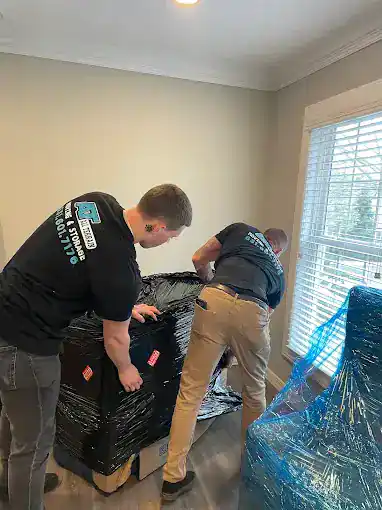
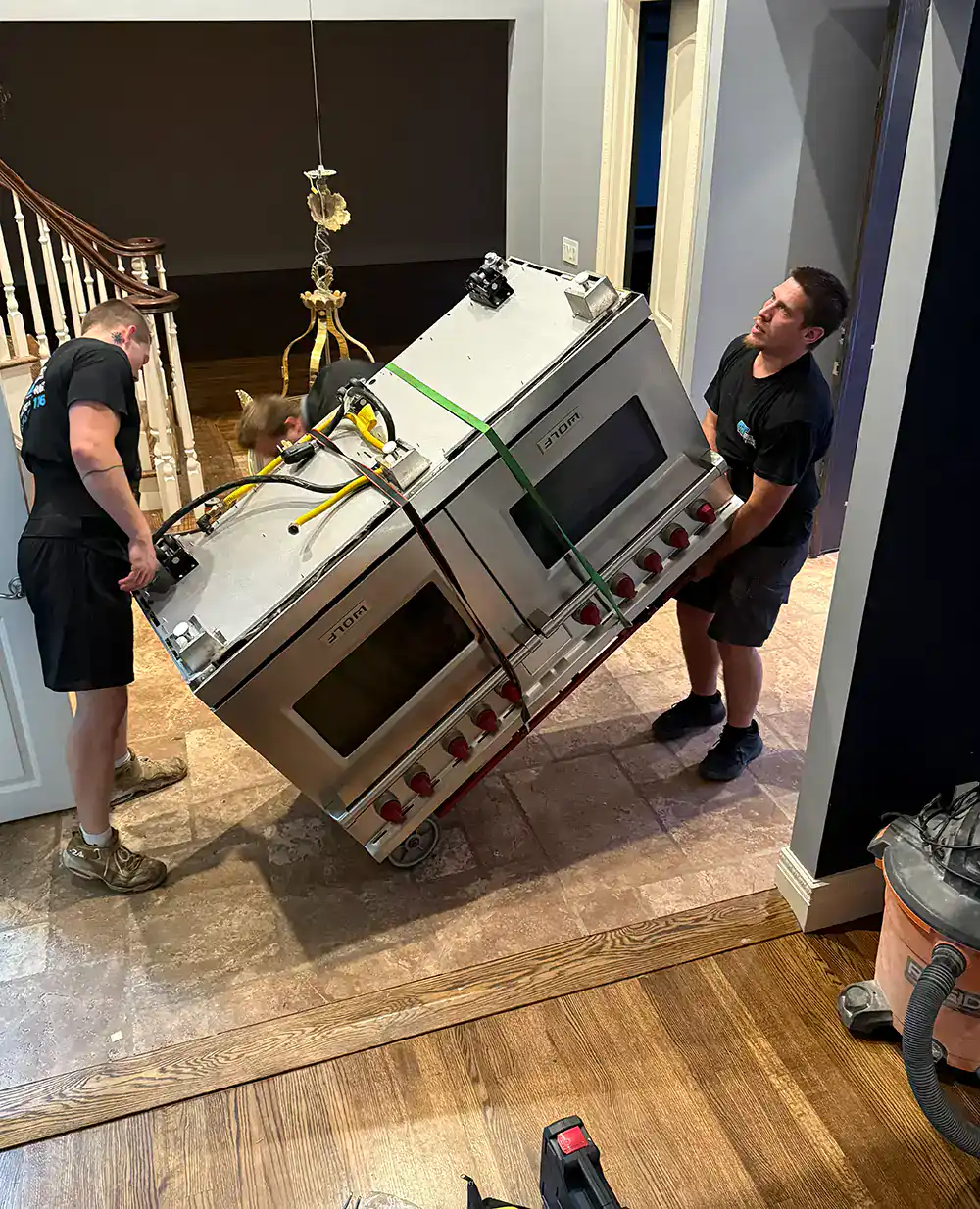
What we do differently is how we actually handle a move. Our crews use moving blankets, shoulder dollies, and floor-protecting equipment to prevent damage to both your belongings and your home. A shoulder dolly allows for ergonomic, controlled lifting through tight spaces — the kind of narrow staircases and low-ceiling hallways that are common in Suffolk County’s split-levels and colonial homes. Floor-protecting bootees keep hardwood floors and tile entryways clean and scratch-free, which matters especially during winter moves when salt and moisture get tracked in from outside.
Training matters too. Our crew members have been doing this for years — not day laborers hired off a job board for a single move — and they know how to navigate a tight driveway in Huntington, how to safely load a baby grand piano, and how to manage a multi-floor office move in the Hauppauge Industrial Park without disrupting operations. That kind of experience doesn’t come from a one-time gig. It comes from showing up to work every day as a professional, on the books, with accountability to a company that has a reputation to protect.
How to Verify Moving Company Licensing Before You Book
You don’t have to take a moving company’s word for it. Every legitimate mover in New York should be able to give you their USDOT number and NYS DOT certificate number without hesitation. Once you have those, you can verify them yourself. The FMCSA SAFER System (safer.fmcsa.dot.gov) shows you a company’s registration status, safety record, and insurance filings. The New York State DOT can also be reached directly at (518) 457-6512 or ny******@****ny.gov if you want to confirm a company’s state certificate.
Beyond the numbers, there are practical things to look for. A legitimate moving company arrives in a marked vehicle with the company name, license number, and address visible. We carry proper equipment on the truck. We provide a written estimate — and ideally, that estimate is based on an in-person inspection of what you’re moving, not a phone call where you’re guessing at cubic footage. The FMCSA specifically recommends in-person estimates as the most accurate way to price a move, because phone and online estimates routinely undercount the job and lead to exactly the kind of surprise charges that generate the most complaints in the industry.
One more thing worth checking: workers’ compensation coverage. If an uninsured worker gets hurt on your property during a move, you could be held liable. A company that employs its crew on the books — with W-2 employees rather than gig-economy contractors — carries workers’ comp coverage that protects both the worker and you. It’s not something most people think to ask about, but it’s one of the clearest signals that a company operates professionally.
Licensed and Insured Movers: What the Insurance Actually Covers
Insurance in the moving industry breaks down into a few distinct categories, and understanding the difference matters when something goes wrong. General liability covers property damage — if a mover puts a dent in your wall or scratches your hardwood floor. Cargo insurance covers your belongings while they’re in transit. Workers’ compensation covers the crew. We carry all three.
What you want to confirm before booking is that we can provide a Certificate of Insurance (COI) if your building or HOA requires it. Many apartment buildings and managed communities in Suffolk County require movers to submit a COI before they’re allowed to use the elevator or loading dock. A company that can’t produce one quickly isn’t set up to handle that kind of move.
Moving Company Licensing Requirements Specific to New York State
New York has more specific requirements for moving companies than most states, which is worth understanding if you’re hiring locally. Beyond federal USDOT registration, movers in New York must hold a state-issued certificate of authority to transport household goods — issued by the NYS Department of Transportation. New companies typically start on a probationary certificate and must demonstrate at least two years of industry experience before receiving a permanent one. That requirement alone filters out a lot of fly-by-night operations.
New York law also requires that movers display their name, certificate number, and physical address on all advertising and on the vehicles themselves. If you see a moving truck with no company name on the side, or a company whose ads don’t list a real address, those are signals that something isn’t right. A P.O. Box is not a physical address. A phone number alone is not enough.
These requirements exist because moving fraud is a documented problem, not a hypothetical one. The federal government runs a dedicated consumer protection campaign — protectyourmove.gov — specifically because the harm caused by rogue movers is widespread enough to warrant it. Customers who’ve had items held hostage, been charged double the quoted price, or dealt with crews that caused damage and disappeared have no legal recourse when the company they hired wasn’t operating under a valid license. The licensing requirements are the floor, not the ceiling — but they matter.
For anyone moving within Suffolk County, the practical takeaway is simple: ask for the USDOT number and the NYS DOT certificate number before you book. Verify them. It takes five minutes and it tells you more about a company than any amount of marketing copy ever will.
What Professional Moving Services Look Like on Moving Day in Suffolk County
There’s a difference between a company that checks the licensing boxes and one that actually operates at a professional level from start to finish. In Suffolk County, that distinction plays out in some specific ways that are worth knowing about before you book.
The geography here creates real logistical challenges. Narrow lanes in the Hamptons, tight driveways in Smithtown, multi-story colonials in Huntington with low ceilings and winding staircases — these aren’t hypothetical obstacles. They’re the everyday reality of moving on Long Island, and they require movers who know how to work in these conditions without causing damage. Our crews have been navigating all of it for years. A crew hired off a job board for the day has not.
Our professional moving services mean showing up with the right equipment for the job — not improvising on-site. Shoulder dollies for heavy items like safes and pianos. Moving blankets to protect furniture during transport. Floor-protecting bootees so your hardwood entryway doesn’t get scratched or salt-stained during a winter move. These aren’t extras. They’re part of how we operate.
There’s also the question of communication. When you’re directing our crew through a complex move — telling them how to position a piece of furniture, flagging a fragile item that needs special handling, coordinating the logistics of a commercial office relocation in the Hauppauge Industrial Park — you need to be able to communicate clearly and have that communication land. All-English-speaking crews aren’t a nice-to-have in those situations. They’re a practical necessity.
And when the move is done, the final bill matches what you were quoted. Not approximately. Not “subject to adjustment based on time.” Exactly. A guaranteed quote is one of the clearest signals that we operate transparently — because we’re confident in our process and don’t need to pad the bill after the truck is loaded.
How to Choose Professional Moving Services You Can Actually Trust
The short version: verify the license numbers, confirm the insurance, ask whether the crew are employees or contractors, and get your estimate in person. Those four steps will tell you more about a moving company than any amount of five-star reviews or marketing language.
The longer version is that professional moving services aren’t just about having the right paperwork. They’re about consistent crew quality, proper equipment, clear communication, and a process that’s been refined over years of real moves in a real market. That combination is harder to find than it should be — but it exists.
If you’re planning a move in Suffolk County, NY and want to work with a team that’s been doing this for 20 years with fully licensed, insured, on-the-books crews, we’re here to help. Get an in-person estimate, ask for our credentials, and see for yourself what the difference looks like.