Moving a business is nothing like moving a home. There are permits to coordinate, equipment to protect, and a schedule that can’t afford to slip. This guide walks you through what professional
commercial movers actually do, what separates a reliable company from a risky one, and what questions to ask before you sign anything.
If you’re planning an office relocation anywhere in Suffolk County — from Hauppauge to the Hamptons — this is the clearest breakdown you’ll find.
A commercial move isn’t just a bigger version of moving an apartment. The stakes are different. Every hour your business isn’t operational is money out the door, and one bad mover can turn a two-day transition into a two-week headache. Whether you’re relocating an office along the Route 110 corridor in Melville, moving out of a suite in the Hauppauge Industrial Park, or shifting a retail space closer to the Ronkonkoma hub, the process has more moving parts than most business owners expect. This guide covers what to look for, what to watch out for, and how commercial moves in Suffolk County actually work.
Full Service Moving Companies: What You're Actually Getting
When people say “full service,” they mean a crew that handles everything — packing, loading, transport, unloading, reassembly, and cleanup. For a commercial move in Suffolk County, that also means coordinating with your building’s management team, scheduling around your business hours, and making sure nothing gets left behind or misplaced in the shuffle.
The difference between a full service moving company and a basic hauler is accountability. We arrive with the right equipment, know how to handle IT infrastructure and modular office furniture, and have a plan before we touch a single desk. That preparation is what keeps your move on schedule.
What Kind of Moving Help Do You Actually Need?
Not every commercial move requires the same level of service, and understanding what you need upfront saves time and money. Some businesses want a crew to handle everything from the first box to the last piece of furniture. Others have already arranged a rental truck and just need professional labor to load or unload it. Both are legitimate options — and we’ll be straightforward about which makes more sense for your situation.
For larger office moves — the kind that involve multiple departments, server rooms, and rows of workstations — full service is almost always the right call. The logistics of coordinating a move like that while keeping some part of your business running requires experience and a clear plan. Trying to manage it with a skeleton crew and a few rented dollies usually costs more in the long run.
For smaller relocations — a single office, a retail kiosk, a medical suite — labor-only service can be a smart, cost-effective choice. You control the truck, the timeline, and the cost. Our crew handles the heavy lifting, literally. Either way, what matters most is that we’ve done this kind of work before, carry the right insurance, and give you a written quote before anyone shows up.
One thing that often gets overlooked: what happens to everything you’re not taking with you. Old furniture, outdated equipment, filing cabinets full of nothing useful — that stuff doesn’t move itself. We handle both moving and junk removal in the same trip, which eliminates the need to coordinate two separate vendors, two separate schedules, and two separate invoices.
House Moving Companies vs. Commercial Movers — Why the Difference Matters
A company that’s great at moving homes isn’t automatically equipped for commercial work. Residential and commercial moves share the same basic mechanics — pack it, load it, move it, unload it — but the operational requirements are genuinely different.
Commercial moves often involve building access restrictions, loading dock scheduling, elevator reservations, and certificate of insurance requirements before a crew is even allowed on the premises. Many office buildings and commercial properties in Suffolk County require movers to submit a COI — a certificate of insurance — in advance. If your mover doesn’t carry the right coverage or doesn’t know to ask about this, you could find yourself on moving day with a crew that can’t legally enter the building.
There’s also the equipment factor. Moving office furniture systems — the kind with modular panels, overhead storage, and integrated wiring — requires a different approach than moving a bedroom set. IT equipment, server racks, and sensitive electronics need to be handled carefully, packed correctly, and transported in a way that protects them from vibration and impact. A mover who mostly does residential work may not have the experience or the equipment to do that well.
Then there’s the timeline pressure. When you move a house, a delay is inconvenient. When you move a business, a delay is expensive. We work regularly throughout Suffolk County — particularly in high-volume areas like the Hauppauge Industrial Park and the Route 110 corridor — and understand that the schedule isn’t flexible. We plan accordingly. That local knowledge, knowing which buildings have tricky loading situations, which roads to avoid during peak hours on the LIE, which municipalities have specific requirements for commercial vehicles — is something we’ve built over years of doing this work in one place.
Relocation Company vs. Moving Company: What's the Difference?
The terms get used interchangeably, but there’s a meaningful distinction. A moving company transports your belongings from one location to another. A relocation company manages the entire transition — logistics, storage, timing, coordination, and sometimes even the junk removal and cleanout on the back end.
For most commercial clients in Suffolk County, what you actually want is the latter. You want one point of contact who understands the full scope of the job and can handle it without you having to manage five different vendors.
Relocation Movers: What a Complete Commercial Move Actually Looks Like
A complete commercial relocation starts well before moving day. It begins with an in-person assessment — someone who actually comes to your location, walks the space, understands what’s being moved, and gives you a written quote based on what they saw. Not a number pulled from a phone call. Not an estimate based on square footage. An actual assessment.
From there, we coordinate the logistics: building access, parking arrangements, elevator reservations if needed, and a timeline that fits your business schedule. Many commercial clients in Suffolk County prefer to move on a weekend or after hours to avoid disrupting operations. We work seven days a week and run extended hours to accommodate that. A mover who only operates Monday through Friday, nine to five, probably can’t.
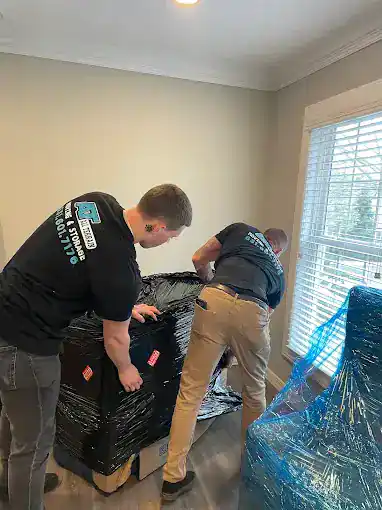
On moving day, our crew arrives with the right equipment — shoulder dollies for heavy furniture, floor-protecting bootees to prevent damage to hardwood or tile, moving blankets, straps, and specialty equipment for anything oversized or fragile. We work efficiently, communicate clearly, and don’t disappear when something unexpected comes up.
After the move, we don’t just drop everything at the new location and leave. Furniture gets placed where it belongs. Equipment gets set up where it needs to go. And if there’s anything left at the old location that you don’t want — old office chairs, outdated equipment, renovation debris — we handle junk removal in the same trip. That combination is rare, and for businesses managing a tight transition timeline, it’s genuinely valuable.
Help Moving Furniture: Specialty Items That Need More Than a Standard Crew
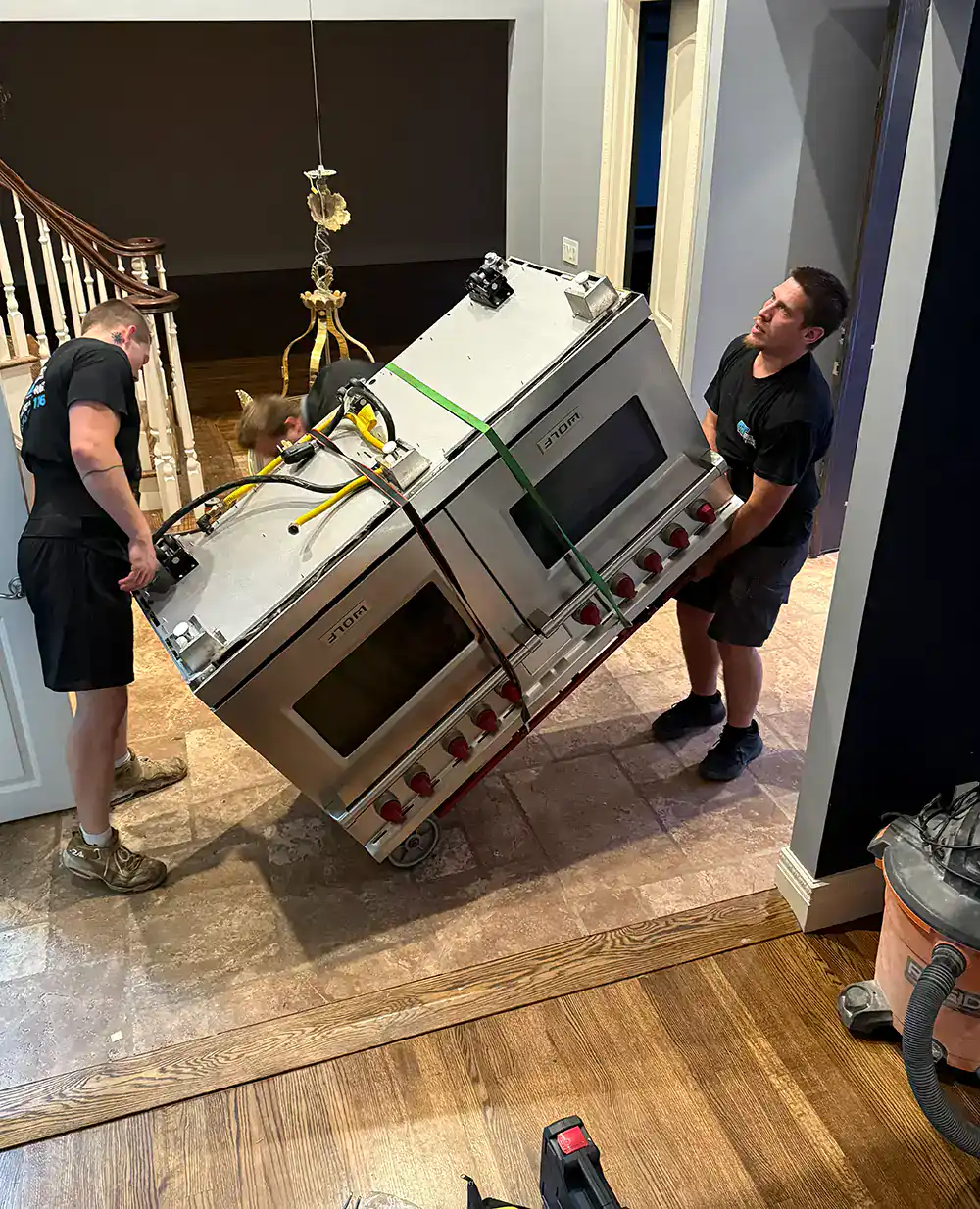
Some pieces require more than a strong back and a dolly. Pianos, pool tables, gun safes, and antique furniture each have their own handling requirements — and the cost of getting it wrong is high.
Take pianos. A standard upright piano weighs between 400 and 800 pounds. A grand piano can weigh over 1,000. Moving one safely requires specialized equipment, a crew that knows how to manage the weight distribution, and often partial disassembly. The cost to move a piano locally typically runs between $200 and $1,000, depending on the type of piano, how many stairs are involved, and the distance. Stair fees usually add $40 to $110 per staircase. That sounds like a lot until you consider that a damaged piano can cost $1,000 to $2,000 to repair internally — or $3,000 to $10,000 or more to replace entirely.
Pool tables are another one people underestimate. They weigh between 400 and 1,000 pounds and can’t simply be tipped onto a dolly. The slate bed has to be carefully disassembled, moved in sections, and reassembled and releveled at the new location. It’s a job that takes time and experience to do without cracking the slate or warping the frame.
Gun safes present a different challenge — mostly the weight and the awkward dimensions. A fully loaded gun safe can weigh anywhere from 200 pounds to well over 1,000. Getting one through a narrow hallway, down a flight of stairs, and into a vehicle without damaging the safe, the walls, or the floor requires the right equipment and a crew that’s done it before. Our customers specifically mention how we navigate tight spaces with a large safe — that’s not an accident, it’s the result of having the right tools and knowing how to use them.
If your business has any of these items — a piano in a hotel lobby, a pool table in a recreation center, a safe in a gun shop or a private office — make sure the company you hire has handled them before. Ask directly. A mover who hesitates or gives a vague answer is telling you something.
Choosing a Licensed and Insured Moving Company in Suffolk County, NY
Before you book anyone, verify their credentials. In New York State, every legitimate moving company must hold a NYSDOT license and display a USDOT number on their vehicles, website, and advertising. For interstate moves, they also need a valid MC number registered with the FMCSA. These aren’t formalities — they’re the baseline that separates accountable movers from operators who have no legal obligation to honor a quote or cover damage.
Beyond licensing, look for a company that gives you a written estimate after an in-person visit, guarantees that the final cost matches the original quote, and carries full cargo insurance. The BBB documented 69 moving scam reports in 2025 alone, with average losses of $505 per incident. Most of those situations started with a verbal quote and no written contract.
If you’re planning a commercial move anywhere in Suffolk County — from a small office in Smithtown to a full floor in the Hauppauge Industrial Park — All Terrain Moving and Junk Removal Inc. has been doing this work for 20 years, with professional on-the-books employees, verified licensing, and a straightforward guarantee that what we quote is what you pay. Reach out to schedule an in-person estimate and get a clear picture of what your move actually involves.
A commercial move isn’t just a bigger version of moving an apartment. The stakes are different. Every hour your business isn’t operational is money out the door, and one bad mover can turn a two-day transition into a two-week headache. Whether you’re relocating an office along the Route 110 corridor in Melville, moving out of a suite in the Hauppauge Industrial Park, or shifting a retail space closer to the Ronkonkoma hub, the process has more moving parts than most business owners expect. This guide covers what to look for, what to watch out for, and how commercial moves in Suffolk County actually work.
Full Service Moving Companies: What You're Actually Getting
When people say “full service,” they mean a crew that handles everything — packing, loading, transport, unloading, reassembly, and cleanup. For a commercial move in Suffolk County, that also means coordinating with your building’s management team, scheduling around your business hours, and making sure nothing gets left behind or misplaced in the shuffle.
The difference between a full service moving company and a basic hauler is accountability. We arrive with the right equipment, know how to handle IT infrastructure and modular office furniture, and have a plan before we touch a single desk. That preparation is what keeps your move on schedule.
What Kind of Moving Help Do You Actually Need?
Not every commercial move requires the same level of service, and understanding what you need upfront saves time and money. Some businesses want a crew to handle everything from the first box to the last piece of furniture. Others have already arranged a rental truck and just need professional labor to load or unload it. Both are legitimate options — and we’ll be straightforward about which makes more sense for your situation.
For larger office moves — the kind that involve multiple departments, server rooms, and rows of workstations — full service is almost always the right call. The logistics of coordinating a move like that while keeping some part of your business running requires experience and a clear plan. Trying to manage it with a skeleton crew and a few rented dollies usually costs more in the long run.
For smaller relocations — a single office, a retail kiosk, a medical suite — labor-only service can be a smart, cost-effective choice. You control the truck, the timeline, and the cost. Our crew handles the heavy lifting, literally. Either way, what matters most is that we’ve done this kind of work before, carry the right insurance, and give you a written quote before anyone shows up.
One thing that often gets overlooked: what happens to everything you’re not taking with you. Old furniture, outdated equipment, filing cabinets full of nothing useful — that stuff doesn’t move itself. We handle both moving and junk removal in the same trip, which eliminates the need to coordinate two separate vendors, two separate schedules, and two separate invoices.
House Moving Companies vs. Commercial Movers — Why the Difference Matters
A company that’s great at moving homes isn’t automatically equipped for commercial work. Residential and commercial moves share the same basic mechanics — pack it, load it, move it, unload it — but the operational requirements are genuinely different.
Commercial moves often involve building access restrictions, loading dock scheduling, elevator reservations, and certificate of insurance requirements before a crew is even allowed on the premises. Many office buildings and commercial properties in Suffolk County require movers to submit a COI — a certificate of insurance — in advance. If your mover doesn’t carry the right coverage or doesn’t know to ask about this, you could find yourself on moving day with a crew that can’t legally enter the building.
There’s also the equipment factor. Moving office furniture systems — the kind with modular panels, overhead storage, and integrated wiring — requires a different approach than moving a bedroom set. IT equipment, server racks, and sensitive electronics need to be handled carefully, packed correctly, and transported in a way that protects them from vibration and impact. A mover who mostly does residential work may not have the experience or the equipment to do that well.
Then there’s the timeline pressure. When you move a house, a delay is inconvenient. When you move a business, a delay is expensive. We work regularly throughout Suffolk County — particularly in high-volume areas like the Hauppauge Industrial Park and the Route 110 corridor — and understand that the schedule isn’t flexible. We plan accordingly. That local knowledge, knowing which buildings have tricky loading situations, which roads to avoid during peak hours on the LIE, which municipalities have specific requirements for commercial vehicles — is something we’ve built over years of doing this work in one place.
Relocation Company vs. Moving Company: What's the Difference?
The terms get used interchangeably, but there’s a meaningful distinction. A moving company transports your belongings from one location to another. A relocation company manages the entire transition — logistics, storage, timing, coordination, and sometimes even the junk removal and cleanout on the back end.
For most commercial clients in Suffolk County, what you actually want is the latter. You want one point of contact who understands the full scope of the job and can handle it without you having to manage five different vendors.
Relocation Movers: What a Complete Commercial Move Actually Looks Like
A complete commercial relocation starts well before moving day. It begins with an in-person assessment — someone who actually comes to your location, walks the space, understands what’s being moved, and gives you a written quote based on what they saw. Not a number pulled from a phone call. Not an estimate based on square footage. An actual assessment.
From there, we coordinate the logistics: building access, parking arrangements, elevator reservations if needed, and a timeline that fits your business schedule. Many commercial clients in Suffolk County prefer to move on a weekend or after hours to avoid disrupting operations. We work seven days a week and run extended hours to accommodate that. A mover who only operates Monday through Friday, nine to five, probably can’t.
On moving day, our crew arrives with the right equipment — shoulder dollies for heavy furniture, floor-protecting bootees to prevent damage to hardwood or tile, moving blankets, straps, and specialty equipment for anything oversized or fragile. We work efficiently, communicate clearly, and don’t disappear when something unexpected comes up.
After the move, we don’t just drop everything at the new location and leave. Furniture gets placed where it belongs. Equipment gets set up where it needs to go. And if there’s anything left at the old location that you don’t want — old office chairs, outdated equipment, renovation debris — we handle junk removal in the same trip. That combination is rare, and for businesses managing a tight transition timeline, it’s genuinely valuable.
Help Moving Furniture: Specialty Items That Need More Than a Standard Crew
Some pieces require more than a strong back and a dolly. Pianos, pool tables, gun safes, and antique furniture each have their own handling requirements — and the cost of getting it wrong is high.
Take pianos. A standard upright piano weighs between 400 and 800 pounds. A grand piano can weigh over 1,000. Moving one safely requires specialized equipment, a crew that knows how to manage the weight distribution, and often partial disassembly. The cost to move a piano locally typically runs between $200 and $1,000, depending on the type of piano, how many stairs are involved, and the distance. Stair fees usually add $40 to $110 per staircase. That sounds like a lot until you consider that a damaged piano can cost $1,000 to $2,000 to repair internally — or $3,000 to $10,000 or more to replace entirely.
Pool tables are another one people underestimate. They weigh between 400 and 1,000 pounds and can’t simply be tipped onto a dolly. The slate bed has to be carefully disassembled, moved in sections, and reassembled and releveled at the new location. It’s a job that takes time and experience to do without cracking the slate or warping the frame.
Gun safes present a different challenge — mostly the weight and the awkward dimensions. A fully loaded gun safe can weigh anywhere from 200 pounds to well over 1,000. Getting one through a narrow hallway, down a flight of stairs, and into a vehicle without damaging the safe, the walls, or the floor requires the right equipment and a crew that’s done it before. Our customers specifically mention how we navigate tight spaces with a large safe — that’s not an accident, it’s the result of having the right tools and knowing how to use them.
If your business has any of these items — a piano in a hotel lobby, a pool table in a recreation center, a safe in a gun shop or a private office — make sure the company you hire has handled them before. Ask directly. A mover who hesitates or gives a vague answer is telling you something.
Choosing a Licensed and Insured Moving Company in Suffolk County, NY
Before you book anyone, verify their credentials. In New York State, every legitimate moving company must hold a NYSDOT license and display a USDOT number on their vehicles, website, and advertising. For interstate moves, they also need a valid MC number registered with the FMCSA. These aren’t formalities — they’re the baseline that separates accountable movers from operators who have no legal obligation to honor a quote or cover damage.
Beyond licensing, look for a company that gives you a written estimate after an in-person visit, guarantees that the final cost matches the original quote, and carries full cargo insurance. The BBB documented 69 moving scam reports in 2025 alone, with average losses of $505 per incident. Most of those situations started with a verbal quote and no written contract.
If you’re planning a commercial move anywhere in Suffolk County — from a small office in Smithtown to a full floor in the Hauppauge Industrial Park — All Terrain Moving and Junk Removal Inc. has been doing this work for 20 years, with professional on-the-books employees, verified licensing, and a straightforward guarantee that what we quote is what you pay. Reach out to schedule an in-person estimate and get a clear picture of what your move actually involves.
Moving a business is nothing like moving a home. There are permits to coordinate, equipment to protect, and a schedule that can’t afford to slip. This guide walks you through what professional commercial movers actually do, what separates a reliable company from a risky one, and what questions to ask before you sign anything.
If you’re planning an office relocation anywhere in Suffolk County — from Hauppauge to the Hamptons — this is the clearest breakdown you’ll find.