
Piano Movers Serving Suffolk County, NY

Your Piano Arrives Safe. No Exceptions.

From Huntington to the Hamptons, we move pianos, safes, and pool tables the right way — with the right equipment, the right crew, and a price that doesn’t change at the truck.

No Outsourcing, Ever

Every crew member is an All Terrain Moving and Junk Removal Inc. employee. Your piano is never handed off to a subcontracted crew we've never worked with.

Named Equipment, Not Vague Claims

We use piano boards, shoulder dollies, and slate lifts — not furniture dollies with a blanket thrown over them.

Price Locked Before We Arrive

Stairs, long carries, tight hallways — all factored into your quote upfront. What you're told is what you pay.

Licensed, Insured, and Verifiable

DOT# 3706838, MC# 1340650. Fully licensed by NYSDOT, bonded, and carrying extensive cargo insurance beyond the state minimum.

Piano Moving Company, Long Island

Not Every Mover Should Touch a Piano

A piano is not furniture. A 600-lb baby grand going down a 1960s Cape Cod staircase in Smithtown is a completely different job than moving a sofa. The equipment is different, the crew size is different, and the margin for error is essentially zero. One wrong move and you’re looking at soundboard repairs that can run over $1,000 — on top of whatever the instrument is worth to you. That’s the reality of piano moving in Suffolk County, and it’s why the crew matters as much as the truck. We’ve moved uprights, baby grands, and concert grands across Long Island for over 15 years. We know the tight staircases in Port Jefferson colonials, the narrow hallways in Patchogue split-levels, and the access challenges that come with older homes throughout the county. We talk through all of it before moving day — not when we’re standing in your living room trying to figure it out.

Specialty Movers, Suffolk County, NY

What You Get When the Crew Actually Knows the Job
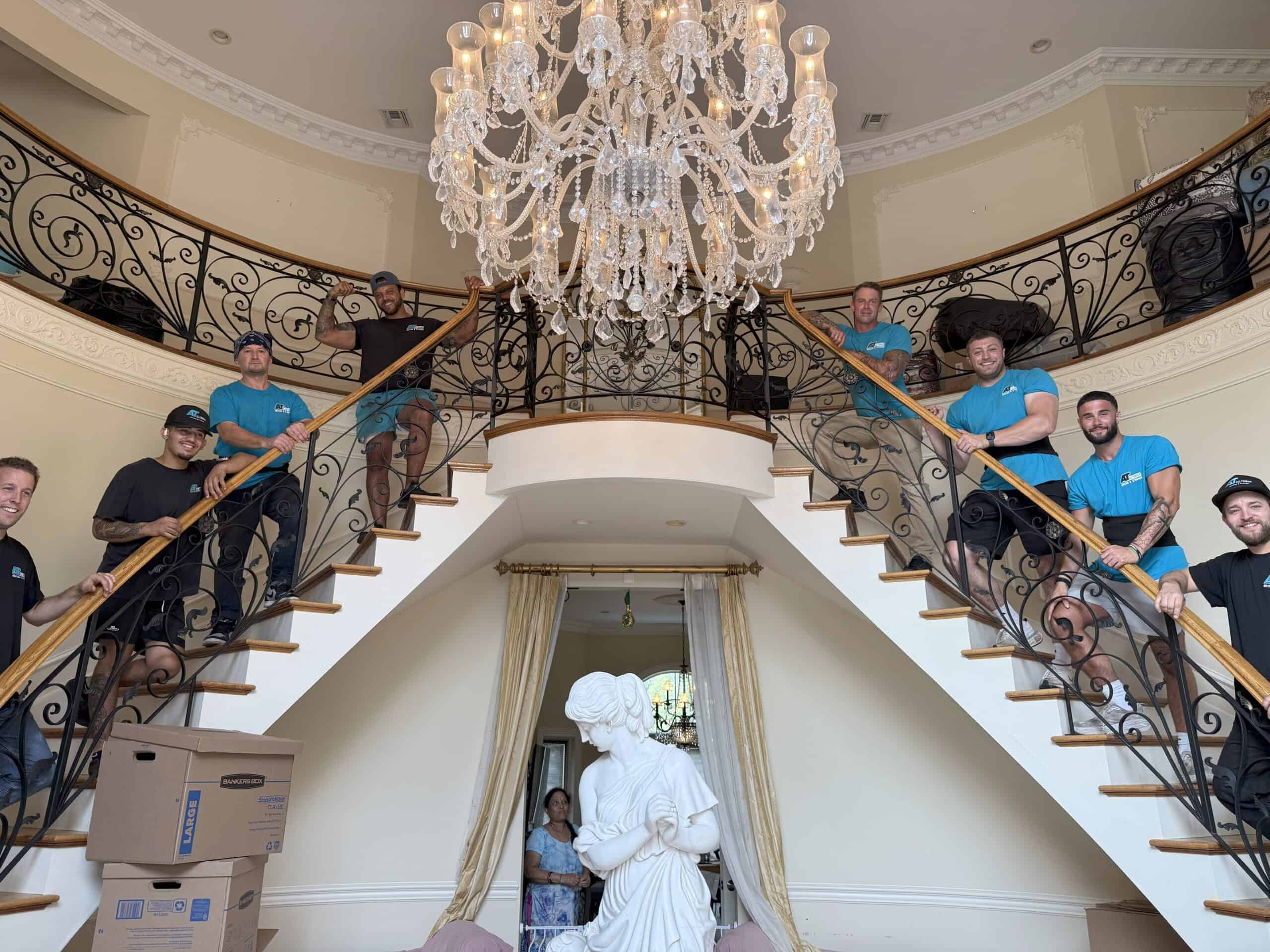
From the estimate to the final placement, here’s what a properly executed specialty move looks like for Suffolk County homeowners.
Moving experts in Amityville, NY, safely handling furniture and boxes during a professional move.

Grand Piano Movers, Long Island

Every Piano Type Moves Differently — We Know Why

A spinet or console upright — somewhere between 200 and 500 lbs depending on the model — stays assembled and moves on a piano dolly with full padding and strapping. It’s still a two- to three-person job done right, but the process is relatively straightforward when the equipment is correct. A baby grand is a different conversation entirely. The legs come off, the lid gets secured, and the instrument is positioned horizontally on a piano board before it goes anywhere. Baby grands run 500 to 700 lbs and require a crew that’s done this before — not one that’s figuring out the leg removal in your living room. Concert grands push past 900 lbs and can exceed 1,200 lbs, which changes the crew size and sometimes the equipment needed to navigate the home. We discuss your specific instrument — the type, the weight class, the access points — during the estimate. That conversation is how we make sure the right people and the right equipment show up on moving day.

Safe and Pool Table Movers, Suffolk County

Pianos Aren't the Only Things We Move Right

Gun safes and vaults are a weight-class problem more than anything else. A smaller residential gun safe might run 200 lbs. A fire-rated vault can push past 1,000 lbs. The dolly type, the crew size, and the route through the home all depend on which one you have — and that’s exactly why we ask before we show up. Pool tables are their own category. A slate pool table assembled weighs anywhere from 650 to over 1,000 lbs, and it cannot be moved in one piece. The slate — typically three separate sections — comes out, the felt is protected, the frame comes apart, and everything is transported and reassembled at the destination. Leveling at the end isn’t optional; even a slight tilt changes how the table plays. We handle the full process, start to finish. If you’re moving a piano and happen to have a safe in the basement and a pool table in the back room, you don’t need three companies. You need one call.
Pool table being carefully moved and protected during professional relocation.
Piano Movers & Safe Moving in Suffolk County, NY FAQs

Common Questions About Our Service

Technically, any mover can attempt it. But a general mover with a furniture dolly and a couple of blankets is not set up for a 600-lb baby grand on a staircase. The equipment is different — piano boards, shoulder dollies, proper strapping systems — and the technique is different. Without them, the risks are real: damaged soundboards, cracked finishes, scratched floors, and injured movers. Soundboard repairs alone can run over $1,000, and that’s before you factor in the sentimental or market value of the instrument. For a standard upright on a flat, open floor plan, a careful general mover might get through it. For anything heavier, older, or more complex — especially in an older Suffolk County home with tight stairs — you want a crew that has done this specific job before, with the right gear.
This is the question that matters most for a lot of Long Island homeowners. A significant portion of the housing stock in Suffolk County was built between the 1940s and 1970s — Cape Cods, split-levels, and colonials with staircases that weren’t designed with a 700-lb piano in mind. The answer starts before moving day. We measure the staircase width, the hallway clearance, and the turn radius at the top or bottom before the crew arrives. On the day itself, the piano goes onto a piano board, gets fully padded and strapped, and the crew works the angles together — no improvising, no hoping it fits. We’ve moved pianos up and down narrow Suffolk County staircases many times over. The banister stays intact. The walls stay intact. That’s the standard.
Yes — and this is one of the clearest signs of whether a mover actually knows what they’re doing. Baby grand and concert grand pianos are not moved assembled. The legs are removed, the pedal lyre comes off, the lid is secured, and the body of the instrument is carefully positioned horizontally on a piano board before it’s moved anywhere. At the destination, everything goes back together in the correct order. Attempting to move a grand piano with the legs attached is how you end up with a cracked leg, a damaged frame, or worse. If a mover tells you they’ll just “tip it carefully,” that’s not a process — that’s a guess.
Almost certainly, yes — and that’s completely normal. It’s not a sign that anything went wrong during the move. Pianos go out of tune after transport because the vibration of the move and any change in temperature or humidity affects string tension and pitch stability. This happens even when the move is executed perfectly. We always recommend scheduling a tuning a few weeks after the move, once the piano has had time to acclimate to its new environment. Tuning too soon — right after delivery — can mean tuning it again shortly after as the instrument continues to settle. Plan for it, budget for it, and don’t be alarmed when it happens.
The honest answer is that it depends on several factors: the type of piano, the weight class, the number of flights of stairs, the distance of the move, and whether there are any access challenges like tight hallways or long carries from the home to the truck. We don’t publish flat rates because a spinet on the ground floor of a Hauppauge ranch and a concert grand on the second floor of a Northport colonial are not the same job. What we do offer is a free, all-in quote that accounts for all of those factors upfront — so the number you’re given before moving day is the number you pay. No stair fees revealed at the truck. Call us or submit a request online and we’ll get you a real number based on your actual situation.
Yes — and it’s one of the things that makes us genuinely useful for homeowners who are dealing with more than one specialty item at once. Gun safes and fire vaults require a completely different approach depending on their weight class, and we discuss that at the estimate stage so the right dolly and crew size are ready on moving day. Pool tables are fully disassembled — slate removed, felt protected, frame broken down — transported, and then reassembled and leveled at the destination. Leveling matters; a pool table that’s even slightly off will affect how the game plays. If you’re moving a piano and also need a safe relocated or a pool table broken down, we handle all of it. One crew, one quote, one moving day.

Tell Us What You Have

Piano type, weight class, safe, pool table — we ask the right questions upfront so nothing surprises us at your door.

We Plan the Route

Staircase width, hallway clearance, doorframe dimensions — all mapped before the crew arrives, not figured out on the fly.

Moved Right, Placed Right

The right equipment, the right crew, and a final placement exactly where you want it — with your floors and walls intact.