
Summary:
PCS orders don’t come with much warning. One week you’re settled in Smithtown or Bay Shore, and the next you’re staring at a timeline that doesn’t leave room for a mover who drops the ball. The government-contracted moving system has let down enough military families — damaged furniture, missed pickups, bills that don’t match quotes — that more and more service members are taking matters into their own hands. This page is for those people. We’ll walk you through how military moves actually work, what to watch for when hiring, and what a reliable local mover in Suffolk County looks like in practice.
Military Moving Companies: Complete PCS Relocation Guide
A PCS — Permanent Change of Station — is one of the most logistically demanding moves a family can make. You’re not just changing addresses. You’re coordinating housing, school transfers, base access, storage, and a hard deadline, often all at once. The Department of Defense processes roughly 400,000 household goods moves every year, which makes the military the single largest customer in the entire moving industry. That volume should mean the system runs smoothly. It often doesn’t.
What most military families don’t realize is that you have options. The government-contracted route isn’t the only one. A Personally Procured Move — sometimes still called a DITY move — lets you hire your own mover and get reimbursed by the government. More families are going this route after watching the contracted system fail them, and for good reason. When you hire directly, you control who shows up at your door.
What Does a PPM or DITY Move Actually Involve?
A Personally Procured Move puts you in charge of the logistics. You hire the moving company, pay them directly, and submit your expenses for reimbursement through your branch’s transportation office. The government reimburses you based on the weight of your shipment and the distance of your move — typically a percentage of what it would have cost them to move you through their contracted system. In many cases, families come out ahead financially, especially if they move efficiently and don’t exceed their weight allowance.
The practical side of it means you need a mover who is licensed, insured, and capable of providing the documentation your transportation office will ask for. That means a verifiable DOT number, proper cargo insurance, and a written estimate that holds up. Movers who work off handshake deals or inflate their final bills aren’t just a headache — they can create real problems when you’re trying to get reimbursed.
There’s also the weight allowance question. Every service member is allocated a specific weight limit based on rank and dependency status. If you’re close to your limit, a mover who also handles junk removal can help you purge before the truck is loaded — which saves money and keeps you compliant. We handle that regularly for families in Suffolk County who are trying to move smart, not just fast.
One more thing worth knowing: peak PCS season runs from May 15 through August 31. The DoD books an estimated 200,000 household goods shipments in that window alone. If your orders fall in that range, booking early is not optional — it’s the difference between getting the mover you want and taking whoever’s available.
Government Regulations and Security Requirements for Military Movers
If your move involves base access — which it often does when you’re stationed at or near an installation like Francis S. Gabreski Airport in Westhampton Beach or one of the Coast Guard stations in Bay Shore or Hampton Bays — your mover needs to be prepared for that. Base access typically requires advance coordination, valid identification for every crew member, and in some cases a background check or vehicle inspection. A crew of day laborers hired off an app the morning of your move won’t clear that gate.
This is one of the most overlooked practical realities of military moving, and it’s where the difference between a professional mover and a budget operation becomes immediately obvious. Our crews are on-the-books employees — not subcontractors, not gig workers. Every person we send to a job is a vetted professional we stand behind. For families with security clearances, that accountability isn’t a nice-to-have. It’s a baseline requirement.
Beyond base access, there are documentation standards that quality military movers should meet without being asked. A valid FMCSA registration (our DOT number is 3706838, MC number 1340650), current liability and cargo insurance, and a written estimate that matches the final bill. The FMCSA publishes a booklet called “Your Rights and Responsibilities When You Move” — it’s worth reading before you hire anyone, including us. A mover who discourages you from reading it is telling you something important.
Suffolk County’s housing market adds another layer of complexity. Inventory is tight, costs are high, and military families sometimes vacate one home before their next housing assignment is confirmed. That gap — even if it’s just a few weeks — needs a solution. We offer climate-controlled, secured storage that bridges it without putting your furniture at the mercy of Long Island’s humidity in July or a cold snap in November.
Relocation Movers for Military Families in Suffolk County, NY
Finding a mover who understands military logistics is different from finding a mover who says they do. The language on most moving company websites sounds the same. What separates us is what happens when orders come in on short notice, when the housing timeline shifts, or when you need someone who actually picks up the phone.
We’ve been handling complex moves in Suffolk County for 20 years, operating out of Islandia — right off the LIE, centrally located to reach Huntington, Babylon, Riverhead, and the East End without adding hours to your day. We know these roads, these neighborhoods, and what it takes to move a household in this county without making a stressful situation worse.
How to Handle a Sudden or Emergency PCS Order on Long Island
The Army recently extended standard PCS order lead time to 120 days — which sounds reassuring until you’re the person who got 30. Short-notice orders still happen, particularly in certain fields, and when they do, the question isn’t whether you can find a mover. It’s whether you can find a good one fast.
Most quality movers are booked weeks out, especially between May and August when PCS season peaks and Long Island’s summer traffic is already working against everyone. That’s why emergency response capability matters as a real operational fact, not just a line on a website. We offer same-day availability for situations where the timeline doesn’t allow for the usual planning window. Morning requests have the best shot at same-day service. We’re available Monday through Sunday, 7:30am to 7pm, because PCS orders don’t wait for business hours.
What that looks like in practice: you call us, we come to you for an in-person estimate, you get a written quote, and the number on that quote is the number on your final bill. No surprises on moving day. For military families managing a move on a fixed BAH budget, that guarantee isn’t a marketing line — it’s the whole point. The moving industry’s reputation for bait-and-switch pricing is well-earned, and it hits hardest when you’re already stretched thin.
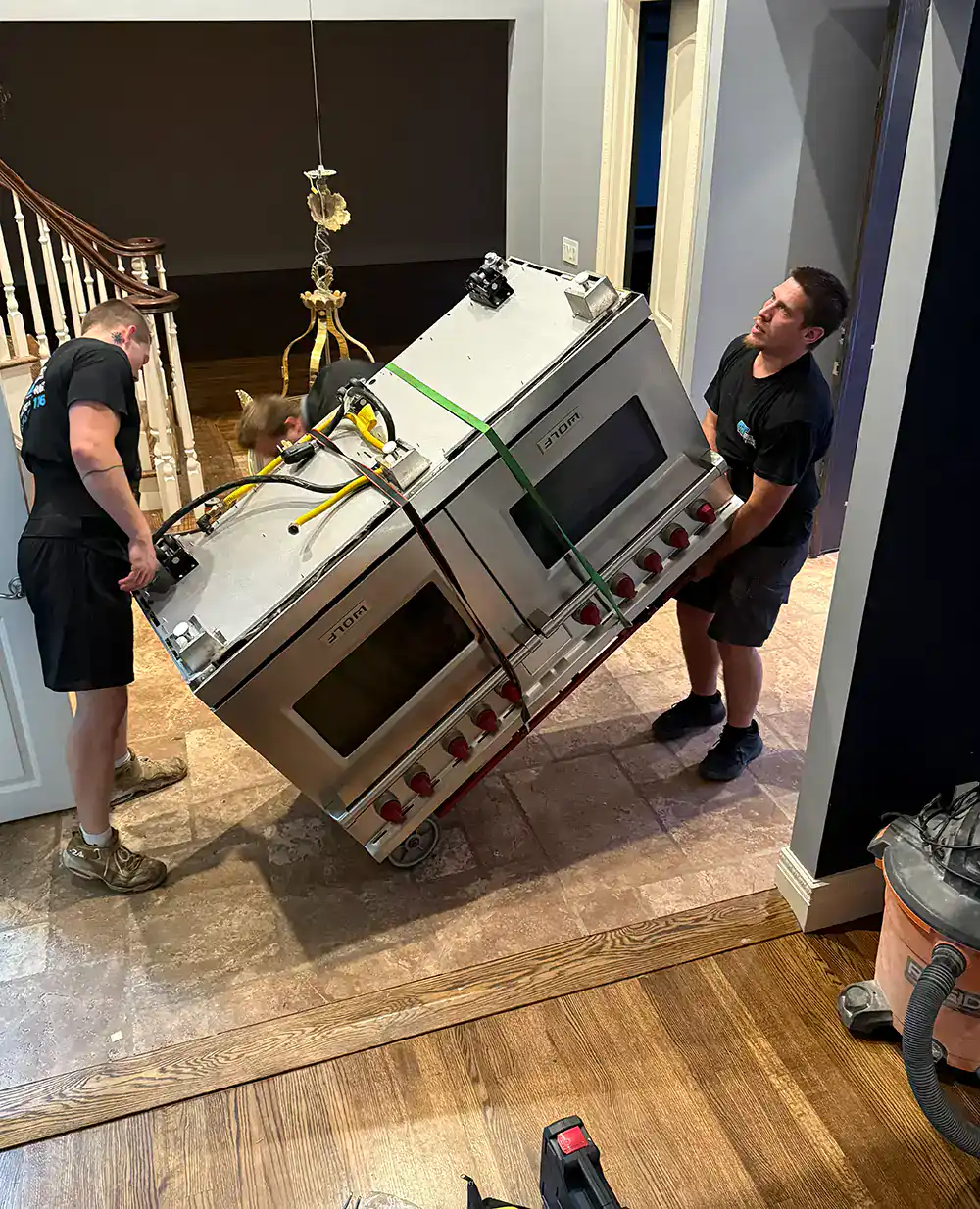
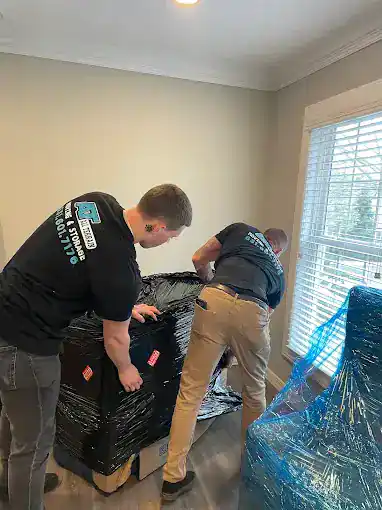
We also bring the right equipment for the job — shoulder dollies, floor-protecting bootees, proper packing materials. When you see a crew walk in wearing floor protection, it tells you something about how we were trained and what we actually care about. It’s a small detail that matters a lot when you’re handing over the contents of your home to us.
Military Family Moving FAQs: What Suffolk County Families Ask Before Booking
**Can I hire my own mover for a PCS move instead of using the government system?** Yes. A Personally Procured Move lets you hire a licensed mover directly and get reimbursed by your branch. You’ll need proper documentation from your mover — a written estimate, proof of insurance, and weight records. The reimbursement rate is based on what the government would have paid for the move themselves, and many families net a positive outcome by moving efficiently. Your transportation office can walk you through the specific reimbursement process for your branch.
**What if I need storage between duty stations in Suffolk County?** This comes up constantly in Suffolk County, especially where housing availability can lag behind move-in timelines. If you’re waiting on base housing at Gabreski or a lease start date near Patchogue or Ronkonkoma, short-term storage shouldn’t mean putting your belongings in a standard warehouse. We offer climate-controlled, secured storage for exactly this situation — no fixed long-term commitment required, and your furniture isn’t sitting in a space that hits 90 degrees in August.
**Do military movers need special licensing or credentials?** Any mover handling an interstate relocation — which most PCS moves are — must be registered with the FMCSA and carry a valid DOT number. Within New York State, movers also need a state DOT license. Beyond that, quality movers carry liability insurance, bonding, and cargo insurance. Before you book anyone, look up their DOT number on the FMCSA website. It takes two minutes and tells you a lot. Our DOT number is 3706838 — look it up.
**What happens if the mover damages something during a military move?** If you’re doing a PPM, your mover’s cargo insurance is your primary protection. Make sure any mover you hire carries it and can document it before moving day. If you’re using the government-contracted system, the claims process runs through your branch’s transportation office — and based on what military families have reported in recent years, that process can be slow. One of the reasons more families are choosing PPM moves is exactly this: more control over who handles their belongings and more direct accountability when something goes wrong.
**How early should I book a mover for a summer PCS move in Suffolk County?** As early as possible. Over 65% of all military moves happen between May 15 and August 31, and Long Island’s moving season is already compressed by summer traffic and high demand. If you have orders and a rough move date, call us before you have every detail figured out. Getting on the schedule early is more important than having everything locked down first.
Finding the Right Military Moving Company in Suffolk County Before Your Orders Expire
A PCS move has enough moving parts without adding an unreliable mover to the list. What you actually need is someone local who knows Suffolk County, picks up the phone, shows up on time with the right crew, and charges you what we quoted. That’s not a high bar — it just gets cleared less often than it should in this industry.
The families who end up in the worst situations are usually the ones who waited too long, went with the lowest number without asking the right questions, or assumed the government system would handle everything. It doesn’t always. Having a backup plan — or going PPM from the start — gives you more control over an already stressful process.
If you’re navigating a PCS move in Suffolk County, Nassau County, or Queens, we’re available seven days a week and can come to you for an in-person estimate. Call 631-601-7176 to talk through your timeline.