Summary:
College move days have a way of going sideways fast. The university assigns you a two-hour window. Your parents drove in from out of state. Your roommate’s family is blocking the elevator. And you’re standing in a half-packed room wondering why you thought this would be easy.
It doesn’t have to be that chaotic. Whether you’re a student heading into your first dorm at Stony Brook or a parent trying to coordinate a Long Island move from three states away, this guide covers what actually matters — timing, logistics, storage, and cost — so you’re not figuring it out on the fly.
Student Moving Tips: How to Plan a College Relocation Without the Last-Minute Scramble
The single biggest mistake students make is waiting too long to start. Research consistently shows that beginning the moving process four to six weeks out dramatically reduces stress — and in Suffolk County, where August move-in season fills up fast, it also dramatically increases your options.
Think about what you’re actually moving. A full dorm setup — bed risers, a mini fridge, a TV, a desktop or monitor, clothes for two semesters, and whatever accumulated over the last year — adds up quickly. Most national van lines won’t even take a job under 1,000 to 2,100 pounds, which means a dorm move often falls below their minimum. That’s exactly why a local, flexible mover is almost always the more practical and cost-effective choice.
Book early, know your university’s move-in window, and have a clear sense of what’s coming with you versus what’s going into storage versus what you’re leaving behind. Those three decisions, made in advance, are what separate a smooth move from a miserable one.
Dorm Room Moving: What the University Doesn't Tell You About Move-In Day
Most universities, including Stony Brook, assign specific move-in time windows — typically two to four hours — to manage the flow of families and vehicles through residential areas. Miss your window or show up unprepared, and you’re either waiting around or rushing through a job that deserves more care.
What this means practically is that speed and familiarity matter enormously. A crew that has never navigated Stony Brook’s West Campus loop roads, doesn’t know which lots serve which residential buildings, or has to stop and ask where the service elevator is will burn through your time window before half the furniture is in the room. That’s not a hypothetical — it’s what happens when you hire someone who’s learning the campus on your dime.
Parking is its own challenge. Universities issue limited move-in permits, and the window for using them is short. Having a crew that knows the campus layout and can work efficiently within that constraint is worth more than saving twenty dollars on an hourly rate.
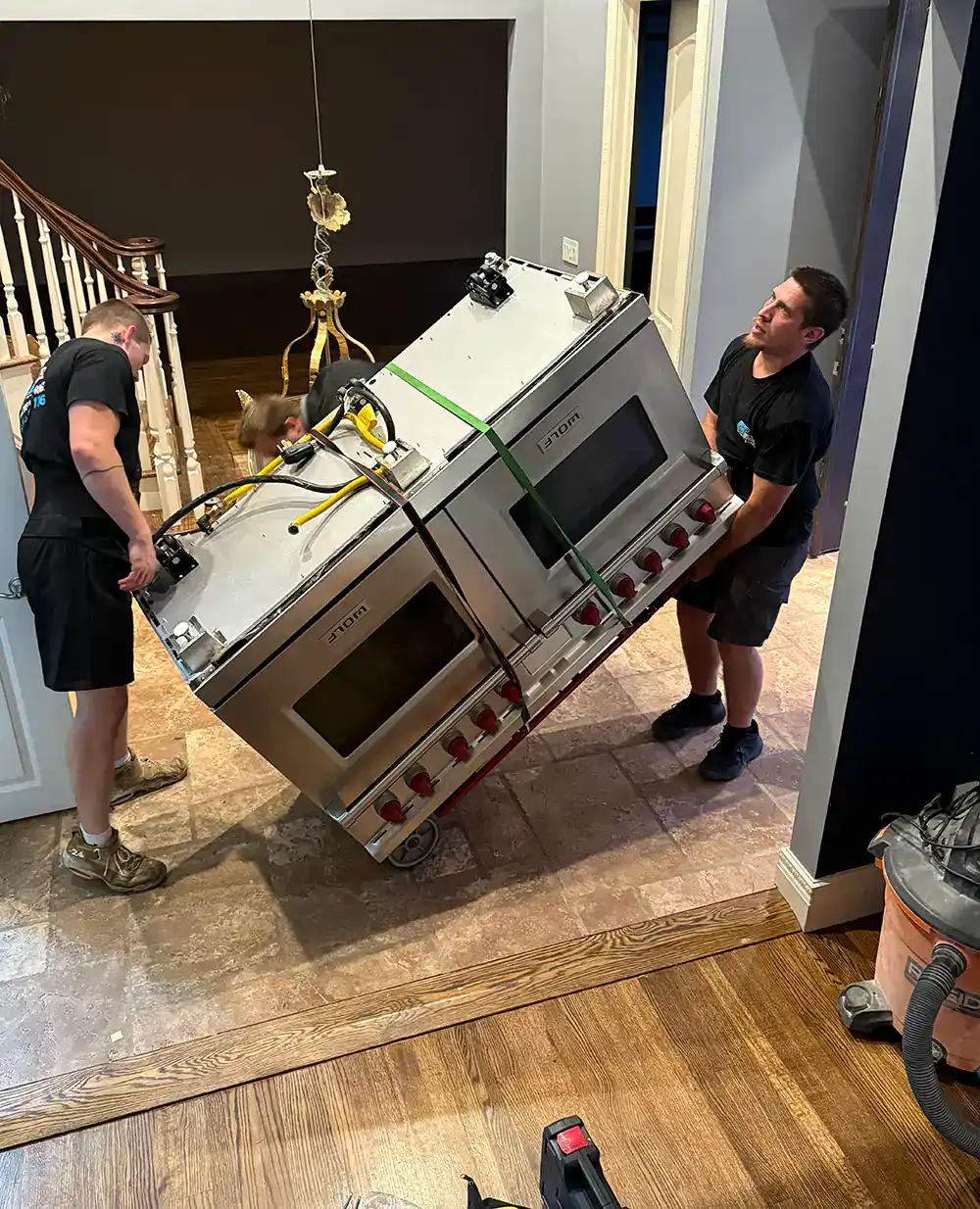
There’s also the question of what happens to your floors and doorframes. University housing staff conduct move-in and move-out inspections, and damage charges are real. Equipment like floor-protecting bootees and shoulder dollies — the kind of thing a professional crew brings as a matter of course — can be the difference between getting your deposit back and explaining a gouge in the hallway to housing services.
One more thing worth knowing: dorm rooms are small, but they’re not simple. Lofted beds, narrow doorways, and shared hallways with other families moving simultaneously create real logistical challenges. A crew that has done this before handles those situations without drama.
Moving Out of a College Apartment in Suffolk County: What's Different From a Dorm
Off-campus apartment moves come with their own set of complications. Students living in Port Jefferson, Setauket, Centereach, or Coram — the towns closest to Stony Brook’s campus — are often dealing with end-of-lease timing that doesn’t line up neatly with the academic calendar. Landlords want the unit back on a specific date. New tenants are moving in right behind you. And the apartment you’ve lived in for a year or two has accumulated significantly more stuff than a dorm room ever did.
The rental market near campus is competitive, which means lease transitions can happen quickly and sometimes unexpectedly. A roommate situation falls apart. A sublet doesn’t come through. A new housing assignment comes in late and you have two weeks to figure out the rest. These aren’t rare edge cases — they’re common, and they’re exactly the kind of situations where same-day or short-notice moving capability matters.
Another reality of apartment move-outs is the junk problem. After a year or two in a place, there’s almost always furniture you don’t want to take with you — a futon that’s seen better days, a bookshelf that won’t survive another move, a broken desk chair, a mini fridge that was never worth keeping. You can’t leave it in the unit, you probably can’t fit it in a car, and the building’s dumpster isn’t designed for furniture.
This is where having a mover who also handles junk removal in the same trip changes the math entirely. Instead of coordinating two separate vendors on two separate days, you can clear out what you don’t want and move what you do in a single visit. For students working against a lease deadline, that kind of efficiency isn’t a luxury — it’s the difference between a clean move-out and a frantic one.
College Storage Solutions for Suffolk County Students During Summer and Study Abroad
Not every student can take everything home for the summer. Parents’ cars have a finite amount of space. Parents’ homes often don’t have the storage capacity people assume. And for students studying abroad for a semester or a full year, the idea of dragging everything back to Long Island only to move it all again in eight months is genuinely impractical.
The question isn’t whether you need storage — it’s what kind makes sense for what you’re storing. That distinction matters more in Suffolk County than it might elsewhere.
Why Climate-Controlled Storage Matters More on Long Island Than Students Realize
August in Suffolk County is hot. Not just uncomfortable — genuinely damaging to certain kinds of belongings. Temperatures in uncontrolled storage units across Long Island can climb well above 100 degrees Fahrenheit during peak summer months, and the humidity compounds the problem. Wood furniture warps. Electronics degrade. Instruments go out of tune or worse. Anything with adhesives, finishes, or sensitive components is at risk.
This is why climate-controlled storage isn’t a premium upgrade for people with expensive taste — it’s a practical necessity for anyone storing electronics, musical instruments, wooden furniture, or anything else that doesn’t tolerate heat and humidity well. A laptop stored in a sweltering unit for three months is not the same laptop you packed away in May.
For students going abroad, the stakes are even higher. You’re not just storing things for a summer — you’re storing them for six months to a year, through a Long Island winter and potentially into the following spring. The range of temperature and humidity swings over that period is significant, and a climate-controlled, secured facility handles all of it without you having to think about it.
The other piece is security. Student belongings — laptops, TVs, gaming equipment, instruments — are exactly the kind of items that make unsecured storage a risk. Knowing your things are in a facility with proper access controls gives you one less thing to worry about while you’re focused on school, travel, or whatever comes next.
How to Coordinate a College Move When Your Family Isn't Local to Long Island
A significant number of Stony Brook students come from outside New York — and their parents are trying to coordinate a Suffolk County college move from Ohio, Florida, California, or further. They’re flying in for a weekend, they don’t know the roads, they’ve never navigated the Long Island Expressway during August, and they have one shot to get everything done before their return flight.
The coordination challenge is real. You need a mover who communicates clearly before the job, shows up on time, and can work efficiently within whatever window you have — not someone who’s hard to reach, vague about timing, or sends a crew that needs to be managed every step of the way.
A few things make this easier. First, book well in advance — late summer is peak moving season across all of Suffolk County, and availability tightens quickly. Second, get an in-person estimate rather than a phone quote. The difference between a quote based on what someone sees in your actual space and a quote based on what you described over the phone is often significant, and it’s the primary reason final bills end up higher than expected. A mover who comes to you, assesses the job, and commits to a price before moving day is the one you want.
Third, make sure you’re working with a licensed and insured company operating under New York State Department of Transportation requirements. This isn’t bureaucratic box-checking — it’s the difference between having legal recourse if something goes wrong and having none. In an industry where a meaningful percentage of operations work informally, verifying credentials before you hand over your belongings matters.
For parents flying in from out of state, the most valuable thing a mover can offer is reliability and clear communication. Knowing that the crew speaks English fluently, that someone local is reachable by phone, and that the price you agreed to is the price on the final invoice removes the variables that make long-distance coordination stressful. The move itself is already complicated enough.
Hiring College Moving Services in Suffolk County, NY: What to Know Before You Book
The students and families who have the smoothest move days are almost always the ones who planned ahead, asked the right questions, and chose a mover based on more than just the lowest number in an email. Price matters — but a quote that doubles by the time the truck is unloaded isn’t a deal. Reliability matters more than most people realize until a mover doesn’t show up.
Suffolk County has specific rhythms that affect how college moves work here — the Stony Brook move-in calendar, the competitive rental market in towns like Setauket and Centereach, the August heat that makes climate-controlled storage a real consideration, and the LIE traffic that separates movers who know Long Island from those who don’t.
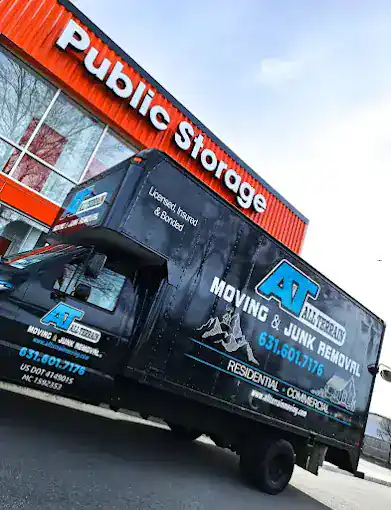
If you’re planning a college move in Suffolk County and want a crew that’s been doing this for twenty years, shows up on time, and charges what we quoted, reach out to us at All Terrain Moving and Junk Removal Inc. We handle the move, the junk removal, and the storage — so you’re not coordinating three different vendors when you should be focused on getting settled.