Long Island’s professional 5 star moving service
Contact Info
Hear from Our Customers
You get a binding estimate upfront. Not a fake quote that doubles when your furniture’s loaded on the truck. You know exactly what you’re paying before anything gets packed.
Your belongings arrive in the same condition they left. No shattered heirlooms, no scratched furniture, no “sorry, that’s not covered” conversations. Everything’s wrapped, padded, and secured by people who’ve done this hundreds of times.
You get actual communication during the move. You know where your stuff is, when it’s arriving, and who to call if something changes. No radio silence for three days while you’re sleeping on an air mattress wondering if your couch made it to Florida.
The timeline makes sense for your life. If you need to be out by the 15th and in your new place by the 20th, that’s what happens. You’re not waiting around for a week because the company overbooked their trucks.
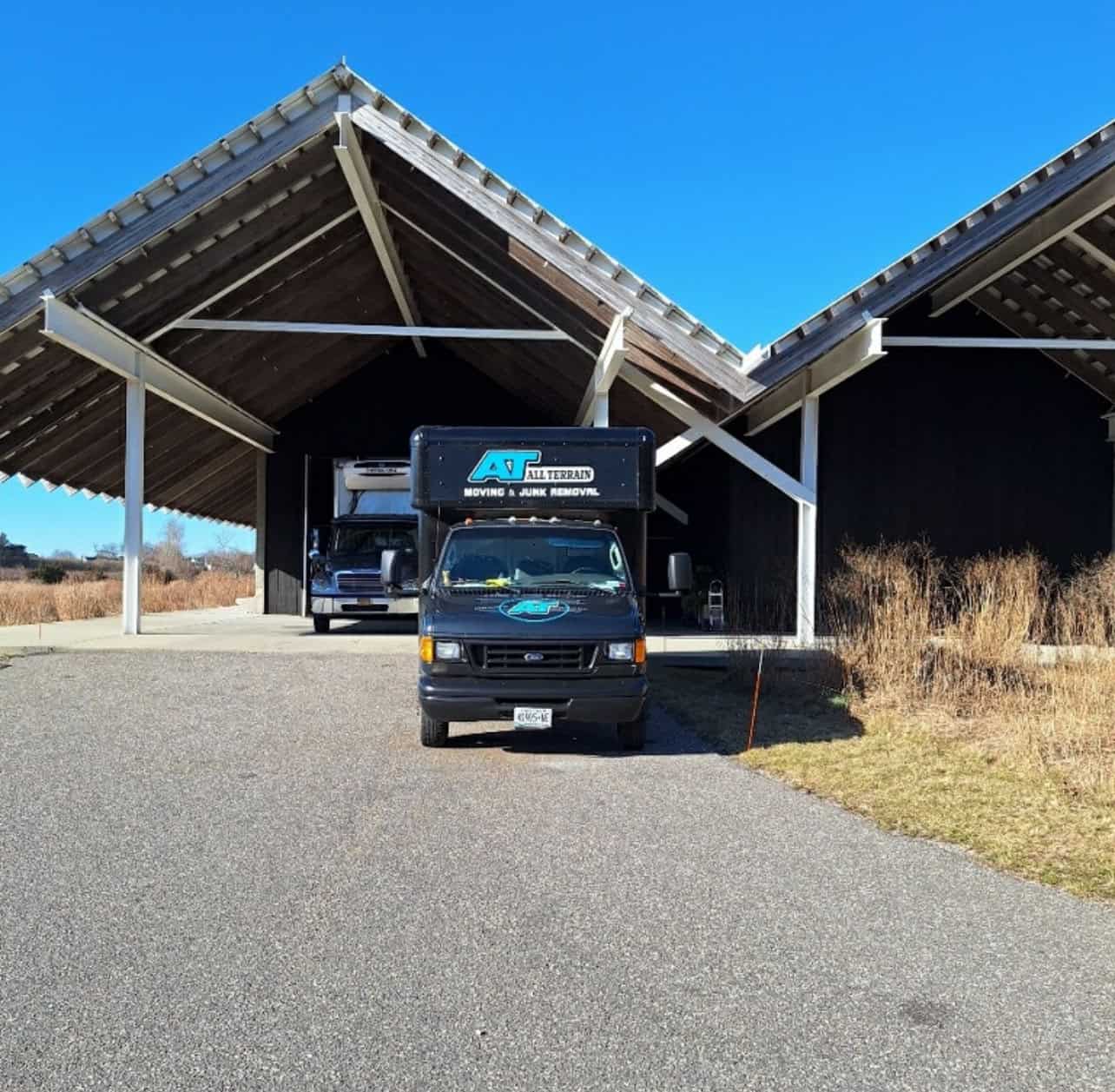
We operate out of Islandia, about 10 minutes from Melville. We’re a family-owned company that handles local moves and cross country work across state lines. We’re DOT licensed and insured for interstate transport.
Melville’s corporate corridor means we’ve moved plenty of professionals relocating for work. Canon USA, Nikon, Henry Schein—we’ve helped employees from these companies move to new offices in other states. We understand tight timelines and the need for flexibility when your employer’s paying for the move.
We’re not the cheapest option you’ll find. We’re also not going to quote you $3,000 and then demand $6,000 when we show up. You’re paying for legitimate insurance, trained movers, and a company that’ll actually answer the phone after your deposit clears.
You contact us for an estimate. We’ll ask about your current home size, where you’re moving, what you’re taking, and whether you need packing services. The more accurate your information, the more accurate your quote.
We provide a binding estimate based on weight or cubic feet. This isn’t a “not-to-exceed” estimate that leaves room for surprise charges. It’s what you’ll pay unless you add items that weren’t on the original inventory.
We schedule your move dates. For long distance moving services, you’ll get a pickup window and a delivery window. Cross country moves don’t work like local ones—your stuff might be on the truck for several days depending on distance.
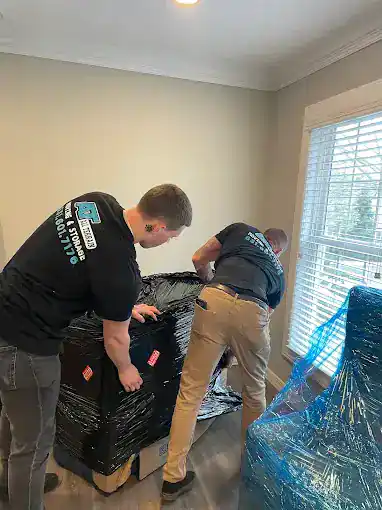
Our crew shows up, inventories everything, and loads the truck. Each item gets tagged and listed. You’ll sign off on the inventory before we leave. This protects both of us if something goes missing.
Your belongings travel to the new location. Depending on where you’re going, this could be a direct trip or your items might share truck space with another customer heading the same direction. Either way, everything stays secured and protected.
We deliver and unload at your new place. You’ll do a final walkthrough of the inventory, and we’ll place furniture where you want it. Any damage gets documented right then, not three weeks later when it’s harder to prove.

Ready to get started?
Full packing services if you want them. Some people prefer to pack their own boxes. Others would rather pay professionals to wrap dishes and protect electronics. We do both. If you’re moving from one of Melville’s larger homes—some properties here push 4,000+ square feet—packing services save you weeks of work.
Specialty item handling for pianos, safes, pool tables, and artwork. These need different equipment and techniques than your average couch. We’ve moved grand pianos out of third-floor walkups and gun safes that weigh 800 pounds. It’s not our first time dealing with items that cost more than the move itself.
Basic insurance is included, but you’ll want to consider additional coverage. The standard coverage is around 60 cents per pound. That means your $2,000 TV is covered for maybe $30 if it breaks. Full value protection costs more upfront but actually replaces or repairs items at current market value.
Storage options if your new place isn’t ready when you need to leave your current one. This happens more than you’d think—closings get delayed, renovations run over, or your new employer needs you there before housing is sorted out. We can hold your stuff in climate-controlled storage until you’re ready.
Melville residents moving to popular destinations like Miami, Boston, or Philadelphia should know that summer moves (May through August) book up fast. The Long Island Expressway location makes Melville convenient for loading, but everyone else is trying to move then too. You’ll get better rates and more flexibility if you can move in fall or spring.

Most long distance moves from Melville run between $2,700 and $10,000 depending on how much you’re moving and how far you’re going. A one-bedroom apartment to North Carolina might cost $3,000. A four-bedroom house to California could hit $9,000 or more.
The price depends on weight or cubic footage, distance, time of year, and services. Packing services add to the cost. So does moving during peak season. Stairs, long carries from the truck to your door, and specialty items also affect the final number.
Get at least three quotes, but don’t automatically pick the lowest one. If one company quotes $4,000 and another quotes $2,000 for the exact same move, the cheaper one is either cutting corners or planning to hit you with extra charges later. Legitimate interstate moving companies have similar cost structures—their quotes should be in the same ballpark.
Check for a DOT number. Every legitimate long distance moving company must be registered with the Federal Motor Carrier Safety Administration. You can look up their DOT number on the FMCSA website to see their safety record and complaint history.
Get a binding estimate in writing. Avoid companies that only offer estimates over the phone or refuse to put anything in writing. A binding estimate means the price won’t change unless you add items. Non-binding estimates can increase by 50% or more on moving day.
Never pay the full amount upfront. Legitimate movers might ask for a deposit, but they don’t demand full payment before loading your stuff. Scammers collect payment and then hold your belongings hostage for additional fees. If someone wants everything paid before the truck is loaded, walk away.
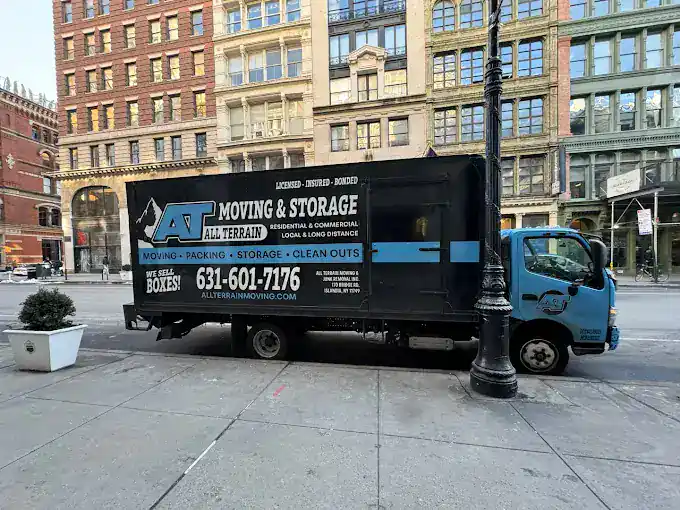
Watch for red flags like no physical address, only a P.O. box, or a company that shows up in an unmarked rental truck. Real moving companies have branded trucks, uniformed crews, and a physical location you can visit. They also have proper insurance and will provide proof of coverage when asked.
Expect anywhere from 3 to 14 days depending on distance. A move from Melville to Virginia might take 3-5 days. A move to Colorado could take 7-10 days. Cross country to California might push two weeks.
The delivery window exists because long distance movers often consolidate shipments. Your furniture might share truck space with another family moving to the same region. This keeps costs down but means the truck isn’t driving straight to your new house. It’s making stops along the way.
You’ll get a pickup date and a delivery window, not a specific delivery date. If the window is June 10-14, plan accordingly. Don’t schedule your internet installation for June 10th and expect your desk to be there. Build in buffer time for the later end of the window.
Weather, traffic, and mechanical issues can delay things. A snowstorm in Pennsylvania or a closed interstate in Ohio affects the timeline. Good affordable out of state movers stay in contact when delays happen. You shouldn’t be calling them repeatedly to find out where your stuff is.
Pack yourself if you have time and want to save money. You’ll need to buy boxes, tape, bubble wrap, and packing paper. Budget several weeks to pack a whole house properly. Most people underestimate how long it takes to wrap every dish, fold every piece of clothing, and box up years of accumulated stuff.
Pay for packing if you’re short on time, have valuable items, or just don’t want the headache. Professional packers work fast and know how to protect fragile items for long distance transport. They also bring all the materials, so you’re not making multiple trips to buy more boxes.
Consider a hybrid approach. Pack your clothes, linens, and everyday items yourself. Let professionals handle the kitchen, artwork, and anything breakable. This saves money while ensuring your expensive stuff is protected properly.
If you pack yourself and something breaks, the moving company might not cover it. They’ll argue it wasn’t packed correctly. If their crew packs it and something breaks, that’s on them. This matters when you’re moving items worth hundreds or thousands of dollars.
Hazardous materials don’t go on the truck. This includes paint, propane tanks, gasoline, motor oil, cleaning chemicals, and anything flammable or corrosive. We can’t legally transport these items across state lines. You’ll need to dispose of them properly or transport them yourself.
Perishable food stays behind. Anything in your fridge or freezer won’t survive several days in a moving truck. Donate it, eat it, or toss it before moving day. Dry goods in sealed containers are usually fine, but check with us first.
Plants often can’t cross state lines due to agricultural regulations. Some states prohibit bringing in plants from other regions to prevent pest and disease spread. If you’re attached to your houseplants, research the rules for your destination state or plan to transport them in your personal vehicle.
Valuables like jewelry, important documents, and cash should travel with you. Don’t pack your passport, birth certificates, or grandmother’s diamond ring in a box that’s going on a truck for a week. Keep anything irreplaceable in your personal possession during the move.
The basic coverage included in your move is minimal. Federal law requires movers to offer liability coverage at 60 cents per pound per item. Your 50-pound TV is covered for $30 if it gets destroyed. That doesn’t come close to replacing a $1,500 television.
Full value protection costs extra but actually covers replacement or repair at current market value. If we damage your couch, we repair it or replace it with something of similar quality. This coverage typically costs 1-2% of your shipment’s declared value.
Check your homeowner’s or renter’s insurance first. Some policies cover your belongings during a move, including long distance moves. Call your insurance company and ask specifically about coverage during interstate transport. You might already have protection and not need to buy additional coverage from us.
Consider the value of what you’re moving. If you’re a recent college grad with IKEA furniture and hand-me-down dishes, basic coverage might be fine. If you’re moving a house full of nice furniture, electronics, and family heirlooms, full value protection makes sense. Do the math on what it would cost to replace everything versus what the additional coverage costs.
Other Services we provide in Melville