Long Island’s professional 5 star moving service
Contact Info
Hear from Our Customers
You’re not wondering if your grandmother’s china made it to North Carolina in one piece. You’re not fielding calls from a mover who suddenly needs another $2,000 to release your couch. You’re not sitting in an empty apartment in Tennessee while your stuff sits on a truck somewhere in Pennsylvania.
When a long distance move is handled right, you know exactly what you’re paying before anything gets loaded. Your belongings are wrapped, padded, and secured like they matter—because they do. The truck shows up when it’s supposed to, and so does everything you packed.
You get updates without having to chase anyone down. If something fragile needs extra attention, it gets it. And when you walk into your new place hundreds of miles away, you’re unpacking—not filing damage claims.
That’s what you’re paying for. Not just labor and a truck, but the difference between a disaster and a fresh start.
We’ve been serving Fort Salonga, Suffolk County, Nassau County, and Queens for years. We’re not a national franchise with a local sticker slapped on the truck. We’re a family-run operation that shows up when we say we will, charges what we quoted, and treats your move like it matters.
Fort Salonga isn’t a typical market. You’ve got established homes, professional families, and people who’ve built something here. When you’re relocating out of state—whether it’s for retirement, a career move, or to be closer to family—you’re not just moving boxes. You’re moving a life.
We’ve handled cross country moves for families heading to the Carolinas, Florida, and beyond. We’ve moved pianos, pool tables, antiques, and entire households without a scratch. And when someone needs help fast—because another company bailed or the timeline moved up—we’ve made it happen.
First, we talk. You tell us where you’re going, what you’re bringing, and when you need to be there. We give you a clear estimate based on the actual scope—not some lowball number that triples on moving day.
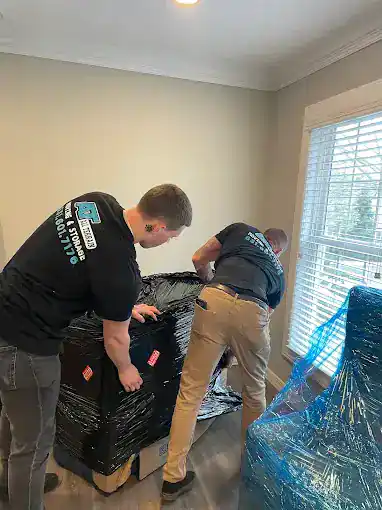
Before anything gets loaded, we walk through your home and identify what needs extra care. Fragile items get wrapped and padded. Furniture gets protected. Heavy or awkward pieces like safes and pool tables get handled with the right equipment, not brute force and hope.
On moving day, our crew shows up on time. We load everything systematically so it travels secure and arrives intact. You’re not left guessing when your stuff will show up—we keep you in the loop from pickup to delivery.
Once we reach your new place, we unload, place items where you want them, and make sure everything made the trip in one piece. If something needs reassembly, we handle it. If there’s a problem, we deal with it directly—no runaround, no finger-pointing.

Ready to get started?
You’re getting a licensed, insured moving company that handles interstate relocations regularly. That means proper equipment, trained crew members, and the legal coverage required to move your belongings across state lines.
We provide full packing services if you want them, or we can work with what you’ve already packed. Either way, we bring the materials—boxes, padding, wrap, tape—and make sure everything is secured for a long haul.
Fort Salonga has one of the highest homeownership rates on Long Island, and a lot of those homes are filled with valuable furniture, antiques, and items that can’t just be tossed in a truck. We handle specialty items like pianos, artwork, and oversized furniture with the care they require. If it’s heavy, fragile, or irreplaceable, we’ve moved it before.
You also get transparent pricing. No surprise fees when we show up. No hostage situations where your belongings don’t get unloaded until you pay more. The quote we give you is what you pay—assuming the scope doesn’t change on your end.
And if your plans shift or you need to reschedule, we work with you. Life happens. We’ve been doing this long enough to know that flexibility matters, especially during a major transition like an out-of-state move.

It depends on how much you’re moving, how far you’re going, and what level of service you need. A one-bedroom apartment moving to Florida will cost significantly less than a four-bedroom house heading to Colorado. Long distance moves are typically priced based on weight and mileage, not hourly rates like local moves.
Most interstate moving companies will give you an estimate after reviewing your inventory. Be cautious of quotes that seem too good to be true—they usually are. Some companies lowball the estimate to get your business, then hit you with extra charges on moving day when your belongings are already loaded.
We provide upfront pricing based on an accurate assessment of what you’re moving. If you’re not sure what you need, we’ll walk through it with you. The goal is to give you a realistic number so there are no surprises later.
For a rough benchmark, the average long distance move in the U.S. costs between $2,000 and $5,000, but that range can go higher depending on distance and volume. If you want packing services, specialty item handling, or storage, that affects the total too.
Check if they’re licensed and insured for interstate moves. Any company moving your belongings across state lines is required to register with the Federal Motor Carrier Safety Administration and have a USDOT number. You can look that up online. If they don’t have one or won’t provide it, walk away.
Read reviews, but read them carefully. Look for patterns—do people mention damage that wasn’t handled? Did the company show up on time? Were there surprise fees? A couple of bad reviews aren’t necessarily a dealbreaker, but if the same complaints keep showing up, that’s a red flag.
Ask how they handle claims. If something does get damaged, what’s the process? Legitimate companies have clear policies and insurance coverage. Scammers will dodge the question or give you vague answers.
Be wary of companies that demand large deposits upfront or only accept cash. Reputable movers will take credit cards and won’t ask for the full payment until the job is done. And if someone shows up on moving day in an unmarked rental truck instead of a company vehicle, that’s a problem.
Trust your gut. If the communication feels off, if they’re pushy, or if they’re making promises that sound too good—find someone else.
A binding estimate means the price is locked in based on the services listed in your contract. As long as you don’t add items or request additional services, that’s what you pay—even if the actual weight ends up being slightly different. It gives you cost certainty, which is helpful when you’re budgeting for a big move.
A non-binding estimate is based on the estimated weight and services, but the final cost can change depending on the actual weight of your shipment. If your belongings weigh more than expected, you’ll pay more. If they weigh less, you’ll pay less. It’s less predictable, but it can work in your favor if the estimate was conservative.
There’s also a binding-not-to-exceed estimate, which is a hybrid. The mover gives you a maximum price based on estimated weight. If your shipment weighs less, you pay less. If it weighs more, you still pay the original estimate. It protects you from overages while allowing for potential savings.
Make sure you understand which type of estimate you’re getting before you sign anything. Ask questions. If the company can’t clearly explain their pricing structure, that’s a warning sign. The moving industry has enough scams and shady operators—don’t give them an opening.
If you’re moving during peak season—roughly May through August—book at least four to six weeks out, maybe more if you’re moving at the end of the month. That’s when most leases end, school lets out, and demand spikes. Movers get booked fast, and if you wait too long, you’ll either pay a premium or scramble to find someone last-minute.
Off-season moves give you more flexibility. If you’re relocating in the fall or winter, you can often book with a few weeks’ notice and sometimes get better rates. The weather might not be ideal, but the availability and pricing usually are.
That said, we’ve handled same-day and emergency moves when other companies canceled or plans changed suddenly. It’s not ideal, but it’s possible if you’re in a bind. Just know that the earlier you book, the more control you have over timing, cost, and logistics.
If your move involves specialty items—pianos, safes, antiques—or if you need packing services, give yourself extra lead time. Those jobs require more planning and the right equipment. Rushing them increases the risk of damage.
Bottom line: book as early as you can, but don’t panic if your timeline is tight. Call us and we’ll tell you honestly whether we can make it work.
It depends on what you want and what you’re willing to pay for. Most long distance moving companies offer full packing services, partial packing, or no packing at all—you choose based on your budget and how much time you have.
Full packing means the crew shows up with all the materials and packs everything for you. It’s the most convenient option, especially if you’re short on time or dealing with a lot of fragile items. It also means the movers are responsible for how things are packed, which can matter if something breaks in transit.
Partial packing is a middle ground. Maybe you pack your clothes and books, and we handle the kitchen, artwork, and anything breakable. It saves you some money while still getting professional help with the tricky stuff.
If you pack everything yourself, you’ll save the most money, but you’re also taking on the risk. If something breaks because it wasn’t packed properly, the moving company’s insurance might not cover it. Movers are generally only liable for damage to items they packed themselves.
We bring the materials either way—boxes, padding, wrap, tape. If you’re doing it yourself, we can walk you through best practices so your stuff actually makes it in one piece. If you want us to handle it, we’ll pack it right the first time.
Legitimate moving companies carry insurance, but the coverage isn’t automatic or unlimited. Federal law requires interstate movers to offer at least two types of liability coverage: Full Value Protection and Released Value Protection.
Released Value Protection is the bare minimum and costs nothing extra, but it only covers 60 cents per pound per item. So if your 50-pound flat-screen TV gets destroyed, you’re getting $30. It’s basically no protection at all.
Full Value Protection costs more, but it actually covers the replacement value or repair cost of damaged items. If something breaks, we’re responsible for fixing it, replacing it, or compensating you for the current market value. This is the coverage most people should choose, especially for long distance moves where the risk of damage is higher.
If something does get damaged, document it immediately. Take photos, note it on the delivery paperwork, and file a claim with the moving company as soon as possible. Most companies have a deadline—usually nine months—for filing claims.
We handle fragile and valuable items carefully, but we’re also realistic. Accidents can happen over hundreds of miles. That’s why we make sure everything is packed and secured properly from the start, and why we’re upfront about coverage options before the move begins.
Other Services we provide in Fort Salonga